In elementary school, I usually spent time with my grandma around the holidays to help bake Christmas cookies. She had a habit of throwing in a small handful of chocolate chips beyond what the recipe called for “because it’s Christmas”.
This wasn’t limited to Christmas. “Because it’s Easter”, or another holiday, or someone’s birthday were also acceptable excuses. It was a little extra because.
I turn 30 in less than a week. (This is actually the last Monday of my twenties! And thankfully, it’s a federal holiday that gives me the day off from work.) So I’ve been in the mood of treating myself a little “because it’s my birthday.” And you only turn thirty once.
Besides a few extra sweets, the real ‘treat yourself’ has come in the form of the new camera: I bought myself a large format camera.
What is a large format camera?

Over the last couple of years, I’ve looked at large format cameras with a mixture of shock and intrigue. Why would someone shoot a camera like that? And also, That looks so cool and interesting!
To answer the question, large format cameras are usually two things:
- They use film that comes in sheets. Most cameras we’re familiar with use rolls of film – either 35mm or 120 are the most common sizes. The length of the roll helps determine how many shots are on the roll of film. By contrast, large format cameras use individual sheets of film that are put into film holders to help keep the film in the dark until it’s time to take a picture. The smallest sheet film available today is usually 4″ x 5″ in size, though some large format cameras use film that’s 8″ x 10″ in size or larger.
- Many large format cameras fit into a category known as view cameras. Most cameras have a viewfinder we look into to help compose our shot and determine if our image is focused. Instead, view cameras let light in through the camera lens and project it onto a ground glass you can use to help line up your shot. The image it shows is upside down and backwards.
But why?
The short answer is that it’s challenging. In a good way.
Using a camera whose core technology hasn’t changed much since the early 1900’s forces you to slow down a lot and consider your photograph before you hit the shutter release. Since there is no technology in the camera to do it for you, your only option is to become a better manual photographer. You are forced to learn how to meter the brightness of your shot and choose the appropriate settings to get the picture you want. View cameras also allow adjustments to the camera which manipulate your plain of focus and other elements in ways that you can’t with other types of cameras.
You also get to look a little strange doing it. In order to see the ground glass in bright light, you have to block out ambient light by covering yourself and your camera with a darkcloth. Consequently, large format photography guarantees I’m in for a bad hair day, and I look a little crazy, like this photo someone took of me:
But the reward is magic.
This view through the ground glass:

The negatives that are bigger than my hand:
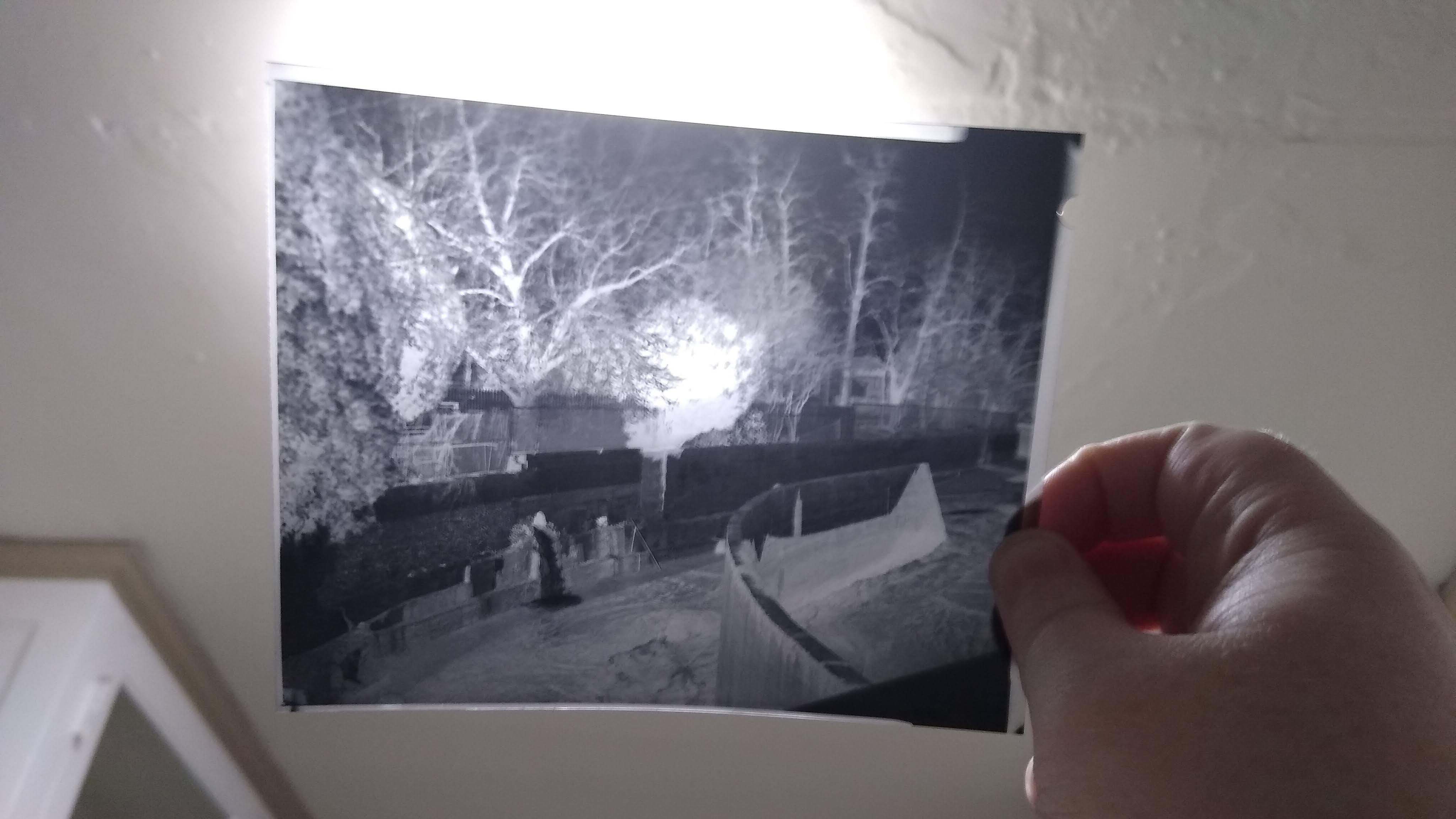
And the images that result have so much rich detail:
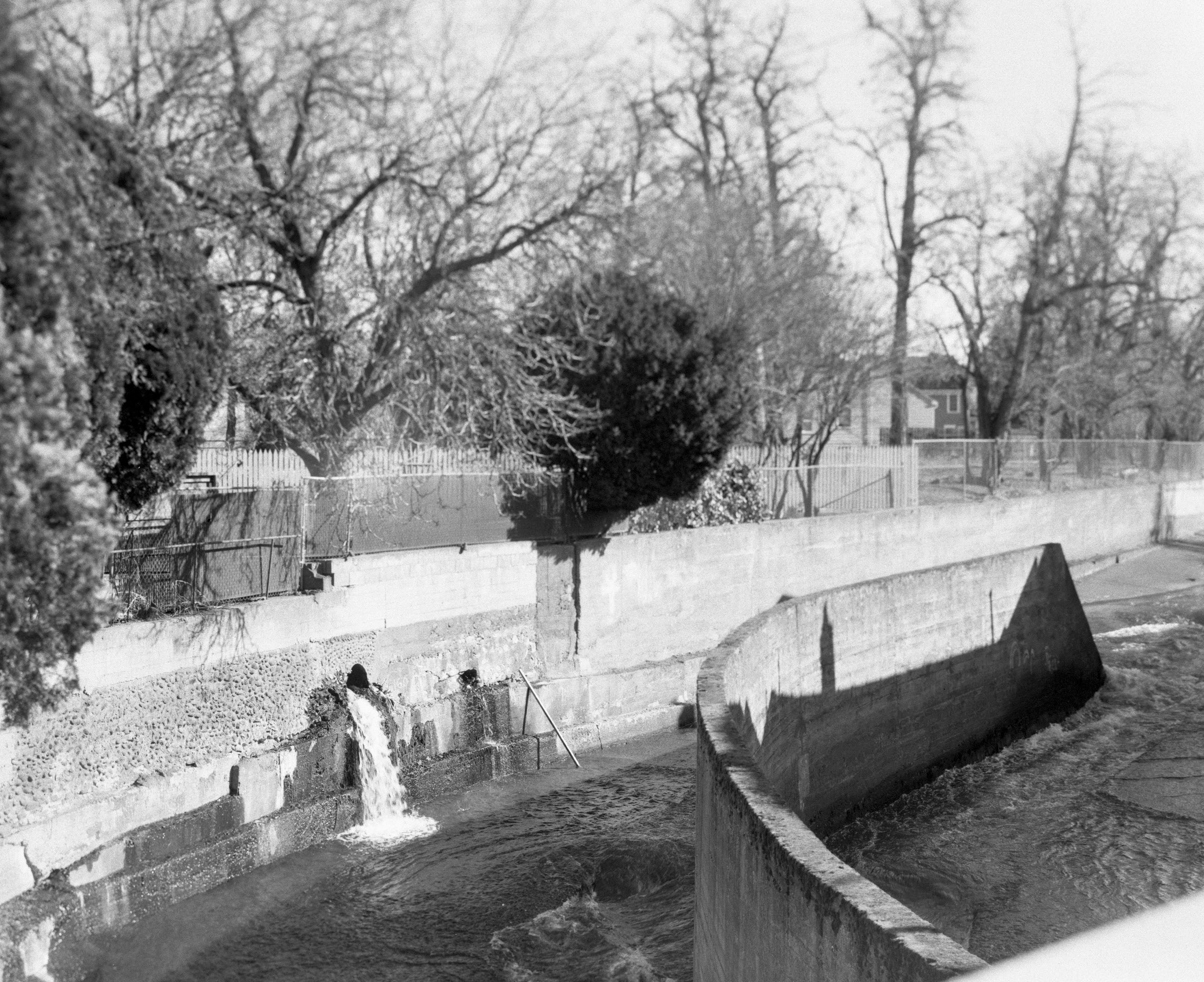
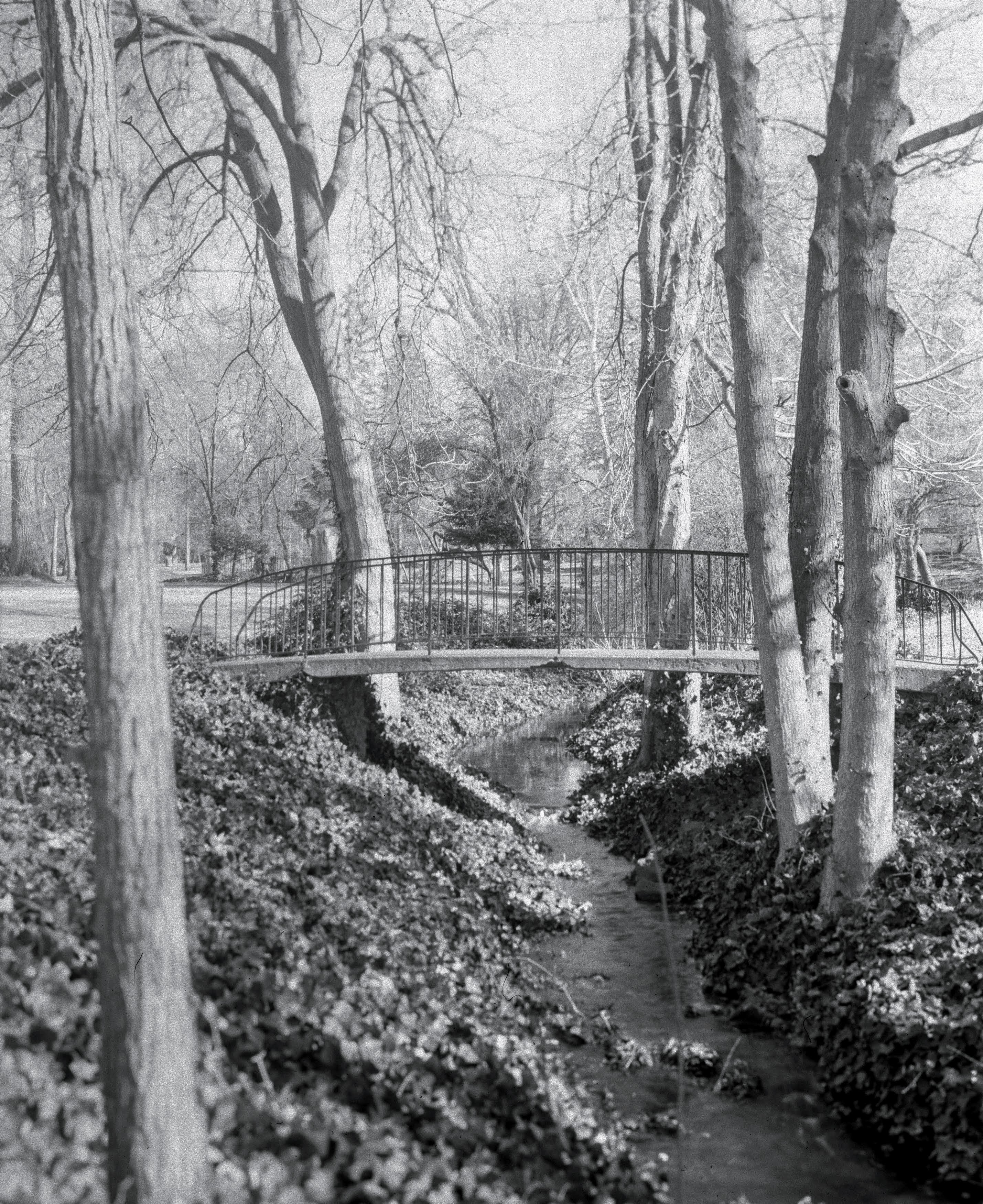


Basically, I’m enjoying it so far.
 Lora Makes Things
2 responses to “Large Format Photography: Turning My World Upside Down”
[…] take pictures. See new things. Test new angles. I want to spend more time experimenting with my new 4×5 large format camera. And I just want to feel the shutter button under my index finger. I’m a fair weather […]
LikeLike
[…] still, I couldn’t resist purchasing a LomoGraflok Instant back for my Intrepid 4×5 camera. This clunky name comes along with this somewhat clunky large format camera back made by the […]
LikeLike